World Water Day
4. March 2021
Mountain biking in Brixen
1. March 2022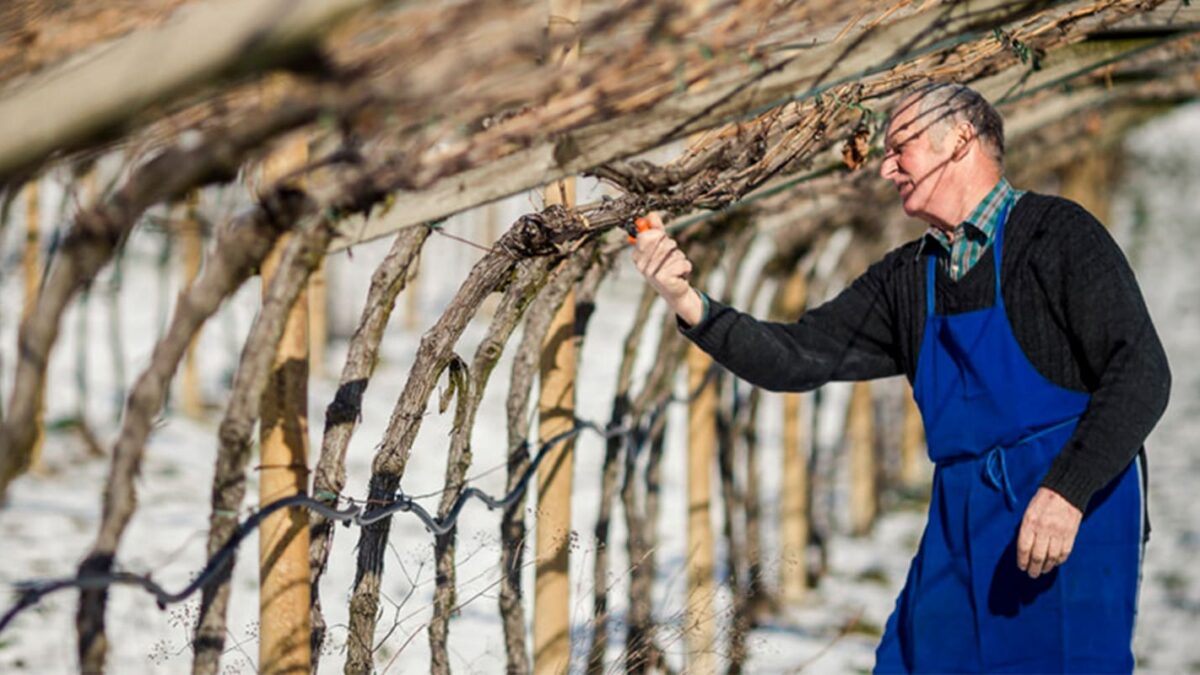
The blue apron
Feel Special | Feel Brixen
The blue apron – a tradition of yesterday and tomorrow
Anyone who has ever spent a holiday in one of the villages of South Tyrol has probably come across one or two men wearing a blue apron. The knee-length blue fabric with ornate embroidery seems like an additional garment and accessory, or does it?
“A man without an apron is only half dressed” – this is an old saying in South Tyrol. In fact, there are still many farmers who have worn the blue apron, also called “Firschte”, every day since childhood and cannot get rid of it. But what does this apron mean or where is it used?
According to historians, the first apron in its form can be found as early as the 13th century. At that time, the citizens did not have much clothing and it usually got dirty or broken during hard work. So the apron came into play to protect the workers’ clothes. The side effect of this was that it became a symbol of tribal affiliation. The higher classes, in fact, had no need for an apron, since the work was done by the lower classes.
Before the 19th century, the apron in Tyrol was mostly made of linen and was worn in white on market days and holidays like a piece of jewellery. But when cotton replaced linen and loden and textile fabrics could be dyed, more and more farmhands wanted a “new” apron.
Consequently, it evolved so that the colour blue was reserved for the men and the women reached for colourful and patterned aprons.
The blue apron slowly became the symbol of the peasants, who not only always wore it at work and at the market, but used it in many different ways: Because of the band around the waist, a belt was no longer necessary and the apron could be used as a bag or pocket. Even when sowing seeds, it was practically reformatted into a sack.
During the fascist era, this symbol gained even more importance. When all Tyrolean culture was banned, including the traditional costume, the apron became a political symbol with which the citizens tried to maintain their identity.
Those who thought there was only one true apron in South Tyrol are mistaken. And it doesn’t just exist here in the country, but also in Styria and parts of Switzerland.
Today, the apron has become a coveted souvenir. In the past, the blue apron was often artistically embroidered with eagles, edelweiss or sayings as a gift to men, and these models in particular are appreciated by tourists.
The apron is therefore a long-established garment that has retained its character and use despite all the fashion trends and globalisation. That is precisely why it is so special and sought-after.


So next time you’re in South Tyrol, don’t miss your chance to bring your loved ones a piece of history and culture!